

8. Clinical Diagnostic Pathways and Next Steps
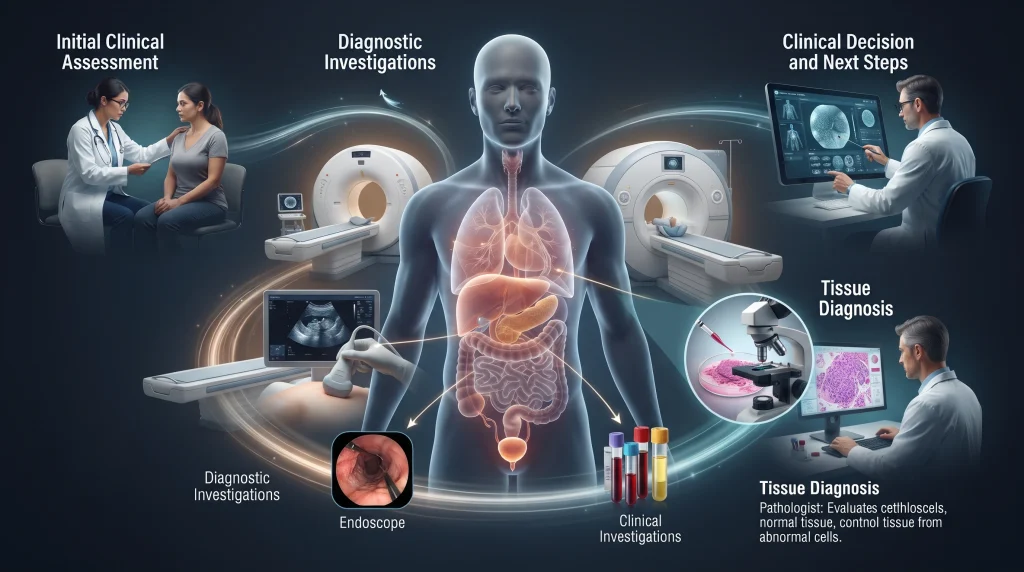
Recognizing a potential red flag does not mean a cancer diagnosis is certain—in fact, the vast majority of subtle bodily changes stem from benign, treatable medical conditions like cysts, infections, or benign tissue hypertrophy. However, the cardinal rule of preventive oncology is time-bound evaluation.
The “2–3 Week Rule”
If you observe any new, persistent, or worsening bodily change—such as an unexplained cough, digestive shift, weight loss, or unusual discharge—that persists beyond 2 to 3 weeks without a clear cause, schedule a comprehensive clinical evaluation with a healthcare professional.
What to Expect During a Medical Evaluation
- Clinical History & Physical Exam: Your physician will document symptom duration, evaluate personal and family medical risk factors, and conduct a targeted physical examination (including palpation of lymph nodes, abdomen, or pelvis).
- Targeted Laboratory Investigations: Blood work to evaluate overall organ function, complete blood counts (checking for hidden anemia), and targeted tumor biomarker assays when indicated.
- Advanced Medical Imaging & Endoscopy: Diagnostic imaging (ultrasound, CT, MRI) or specialized endoscopic procedures (colonoscopy, cystoscopy) to directly visualize tissue architecture and obtain tissue samples (biopsies) for definitive pathological confirmation.
Medical Disclaimer
Important Medical Notice: This document is provided strictly for educational and informational purposes. Most bodily warning signs and physical symptoms stem from non-cancerous, benign medical conditions (such as infections, inflammation, benign cysts, or digestive disorders). Experiencing one or more of these symptoms does not mean you have cancer. Always consult a qualified healthcare professional or primary care physician for proper clinical evaluation, diagnostic testing, and personalized medical advice rather than relying on self-diagnosis.
Sources :
medicalpointinternational.com/fr/symptomes-du-cancer-signes-courants-et-quand-consulter-un-medecin/- elsan.care/fr/nos-actualites/symptomes-de-debut-de-cancer-comment-les-reconnaitre
- msdmanuals.com/fr/accueil/cancer/pr%C3%A9sentation-des-cancers/signes-pr%C3%A9curseurs-de-cancer
- acibadem.fr/news/premiers-signes-cancer-a-ne-pas-ignorer/
- medanta.org/fr/patient-education-blog/early-signs-of-cancer-you-shouldnt-ignore
venkateshwarhospitals.com/blog/national-cancer-awareness-day-10-early-cancer-warning-signs-you-should-never-ignore/- frm.org/fr/maladies-recherches-cancers-focus-cancers-depistage-diagnostic
- dasappacancerhospital.com/blog/10-warning-signs-of-cancer-most-people-overlook-and-when-you-should-see-a-doctor/