

2. Colorectal Cancer: Subtle Transit Shifts and Occult Blood
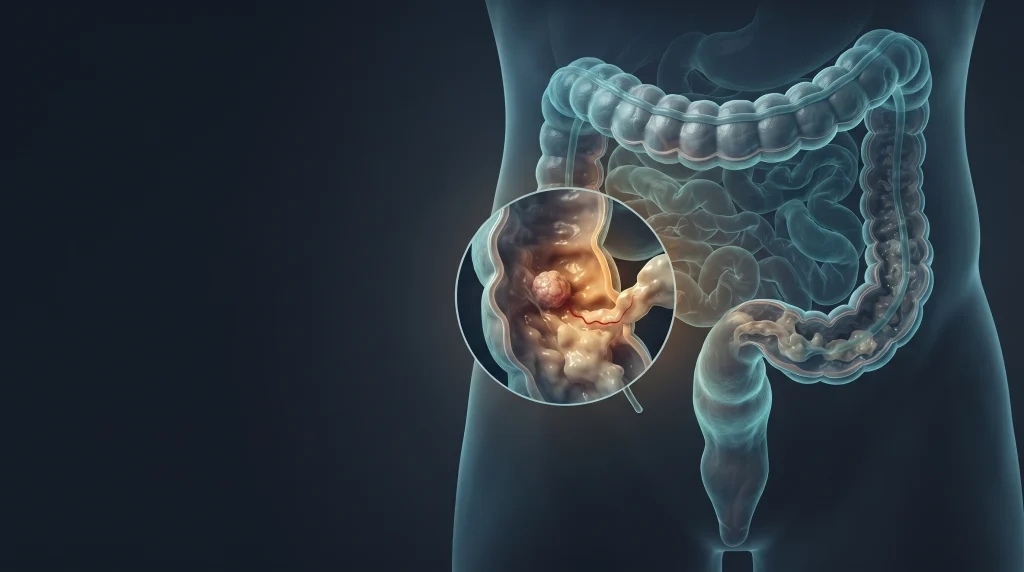
Colorectal cancer is the third most common cancer globally, yet it frequently originates from slow-growing, benign adenomatous polyps along the inner lining of the large intestine. During its early stages, a colorectal tumor rarely causes sharp abdominal pain. Instead, it subtly disrupts normal bowel motility and vascular integrity as stool passes over the altered mucosal wall.
Early Warning Signals
- Subtle Alterations in Bowel Habits: Unexplained shifts in bowel frequency—such as alternating episodes of mild diarrhea and constipation, or stools that become persistently narrower (pencil-thin) due to partial lumen obstruction—should never be dismissed as simple dietary reactions.
- Occult and Visible Bleeding: Small, fragile tumor blood vessels frequently bleed when irritated by passage of intestinal contents. Bleeding from the upper colon may present as dark, tarry stools (melena), while lower rectal lesions typically produce bright red blood mixed with stool or on toilet tissue.
- Persistent Abdominal Discomfort: Recurrent gas, mild cramping, or an uncomfortable sensation of incomplete bowel evacuation (tenesmus) often indicates early intestinal wall irritation.
Diagnostic Pathways and Prevention
Clinical guidelines recommend routine screening for average-risk individuals starting at age 45. Primary diagnostic modalities include:
- Stool-Based Testing: Annual Fecal Immunochemical Tests (FIT) or Fecal DNA testing every 3 years to detect microscopic (occult) blood and abnormal tumor genetic markers.
- Colonoscopy: Performed every 10 years, serving as both a gold-standard diagnostic tool and a preventive intervention through the direct visual identification and removal of precancerous polyps.