Walk down any grocery store aisle today and you will see the word “protein” printed in bold letters on everything from pancake mix to potato chips. On the surface, that looks like progress. People are finally paying attention to how food fuels muscle, metabolism, and satiety rather than obsessing solely over cutting calories.
Yet there is a quiet catch. Eating more protein does not automatically mean you are eating better. When you rely heavily on ultra-processed protein bars, chalky shakes, or heavily salted packaged meals, you often hit your protein target while leaving your body starved for vitamins, minerals, antioxidants, and fiber.
Real nutrition works best when two ideas come together on the same plate: high protein and high nutrient density.
At the same time, it helps to stay honest about how nutrition science actually works. Food research is constantly evolving, and there is no single rigid formula that works identically for every person. Your age, activity level, digestion, budget, and daily schedule all shape what “healthy” looks like for you. Instead of chasing extreme rules, the most logical approach is building balanced, whole-food meals that deliver maximum nourishment without making eating feel like a full-time job.
What “Nutrient-Dense” Actually Means (And Why Protein Alone Isn’t Enough)
Nutrient density is a simple ratio: how many essential vitamins, minerals, amino acids, healthy fats, and fibers you get compared to the calories in a food.
Think about the difference between 300 calories of a sugary, artificially flavored protein bar and 300 calories of wild-caught salmon served over sautéed spinach with a squeeze of lemon. Both might give you roughly 20 to 25 grams of protein. However, the salmon and spinach also supply omega-3 fatty acids, vitamin D, selenium, potassium, iron, folate, and magnesium.
Your body actually needs those micronutrients to put protein to good use. Magnesium, zinc, and B vitamins act as spark plugs for protein synthesis and energy production. Without them, a high-protein diet can leave you feeling sluggish, bloated, or constantly craving sugar an hour after eating.
This does not mean a protein shake or convenient snack is forbidden on a busy afternoon. Balance means recognizing the difference between a helpful convenience tool and the foundation of your diet. When roughly 80% of your meals come from recognizable whole ingredients, your body gets both the building blocks for tissue repair and the micronutrients that keep your immune system, hormones, and brain running smoothly.
The Logic of Protein Distribution Across Your Day
If you look at how most people eat during a typical workweek, the pattern is heavily lopsided:
- Breakfast: Coffee and a bagel, cereal, or a pastry (5–10 grams of protein)
- Lunch: A light salad or a quick sandwich (15–20 grams of protein)
- Dinner: A large portion of meat, fish, or pasta (50–70 grams of protein)
From a biological standpoint, this back-loaded schedule works against you. Protein triggers satiety hormones like peptide YY and GLP-1 while slowing down how fast carbohydrates enter your bloodstream. When breakfast is mostly refined carbs and sugar, your blood glucose spikes early and crashes by mid-morning, leaving you hungry, unfocused, and reaching for extra caffeine.
Spreading your protein more evenly—aiming for roughly 25 to 40 grams per meal depending on your body size and activity level—keeps appetite steady and supports muscle maintenance throughout the day.
Nutrition science has debated whether there is a strict upper limit to how much protein your body can use in one sitting. Newer studies suggest your body can digest and utilize larger single doses over longer periods than older textbooks claimed. Still, from a practical, everyday perspective, steady distribution wins. Three balanced meals of 30 to 35 grams of protein are far easier on your digestion—and much better at preventing 3:00 PM energy crashes—than cramming 80 grams into a late dinner.
The 4-Part Formula for Building a Balanced Plate
You do not need a food scale or a spreadsheet to build high-protein, nutrient-dense meals. A repeatable four-part plate structure does the heavy lifting naturally:
- The Protein Anchor (30–40g): Start by choosing a quality whole-food protein source. Great options include pasture-raised eggs, chicken breast or thighs, wild salmon, sardines, Greek yogurt, cottage cheese, grass-fed lean beef, firm tofu, tempeh, or lentils.
- The Micronutrient & Fiber Base (1–2 cups): Fill half your plate with colorful vegetables or dark leafy greens. Broccoli, Brussels sprouts, kale, spinach, bell peppers, zucchini, and tomatoes add volume, potassium, vitamin C, and gut-supporting fiber for very few calories.
- The Slow-Release Carbohydrate (½–1 cup): Unless you have a specific medical reason to avoid carbs, whole carbohydrates fuel your brain and workouts. Sweet potatoes, quinoa, steel-cut oats, black beans, chickpeas, brown rice, and berries provide sustained energy alongside extra minerals.
- The Healthy Fat & Flavor Layer (1–2 tablespoons): Vitamins A, D, E, and K are fat-soluble, meaning your body cannot absorb them properly without dietary fat. Finishing your meal with extra-virgin olive oil, sliced avocado, walnuts, pumpkin seeds, or tahini makes vegetables taste dramatically better while unlocking their nutrients.
6 High-Protein, Nutrient-Dense Meals That Work in Real Life
Theory only matters if the food tastes good enough that you actually want to eat it on a Tuesday. These six meals combine strong protein numbers with dense micronutrients and realistic prep times.
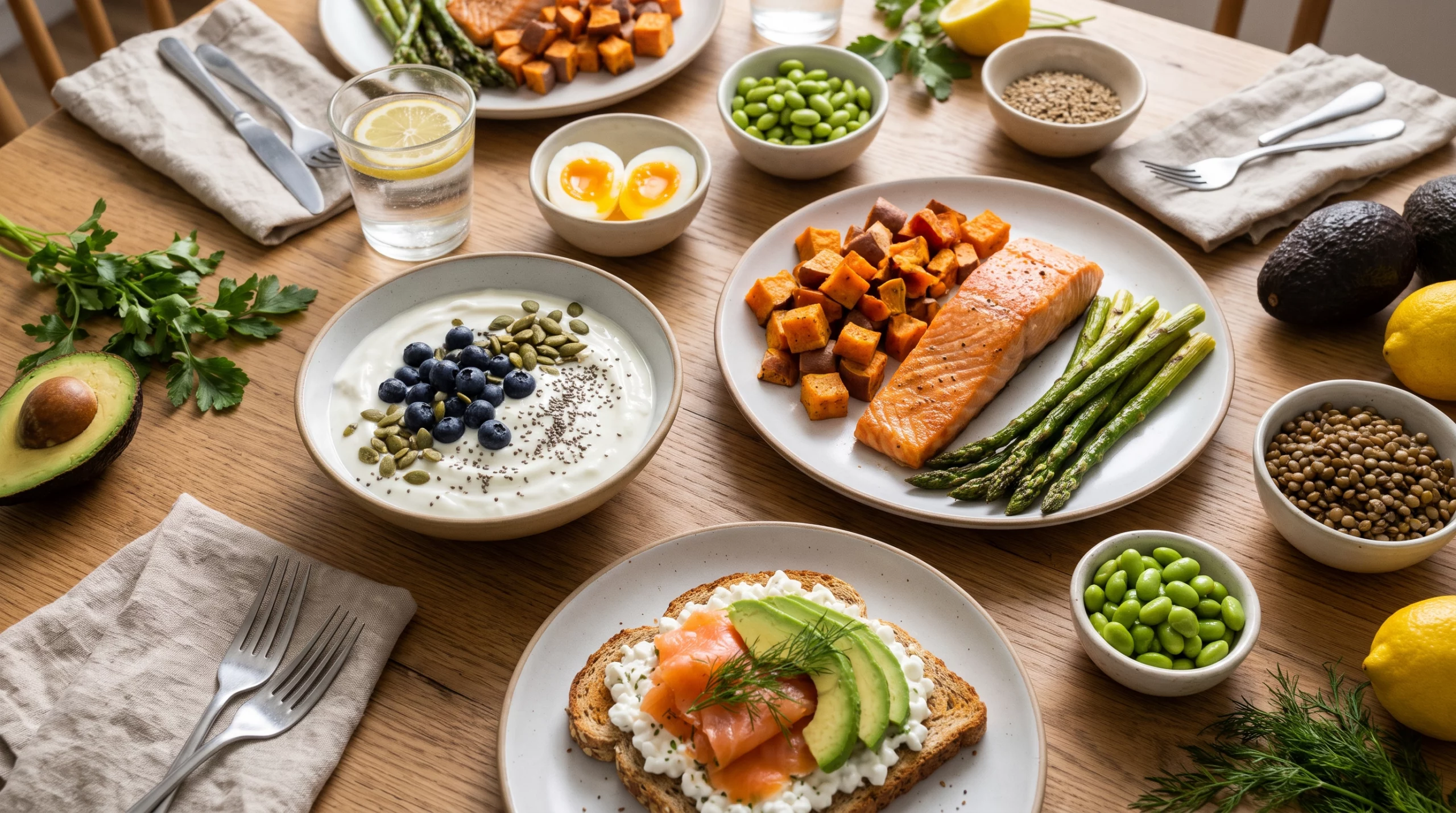
1. Whipped Cottage Cheese, Smoked Salmon, and Avocado Toast
- Estimated Protein: ~34g per serving
- Key Micronutrients: Omega-3 fatty acids (EPA/DHA), Vitamin D, Selenium, Potassium, Fiber
If you want a savory breakfast that takes less than seven minutes to assemble, this combination is hard to beat. Spread half a cup of full-fat or 2% cottage cheese onto two slices of toasted sprouted-grain bread. Top with 3 ounces of wild smoked salmon, a quarter of a sliced avocado, cracked black pepper, and fresh dill or capers. Sprouted grain bread adds extra fiber and B vitamins compared to standard white toast, while the cottage cheese and salmon create a creamy, satisfying meal that holds you over easily until lunch.
2. No-Egg Greek Yogurt, Chia, and Wild Berry Power Bowl
- Estimated Protein: ~32g per serving
- Key Micronutrients: Calcium, Probiotics, Anthocyanins, Magnesium, 11g+ Fiber
Whether you are tired of eating eggs every morning or simply prefer a sweeter start to the day, plain strained Greek yogurt (or Icelandic skyr) is one of the most efficient protein bases available. Stir one tablespoon of chia seeds and one tablespoon of ground flaxseed into a cup of plain Greek yogurt, let it sit for five minutes to thicken, and top with a handful of wild blueberries and chopped walnuts. The chia and flax bring alpha-linolenic acid (plant omega-3s) and soluble fiber that feed beneficial gut bacteria.
3. Mediterranean Chicken, Lentil, and Roasted Veggie Bowl
- Estimated Protein: ~42g per serving
- Key Micronutrients: Iron, Folate, Vitamin C, Potassium, Polyphenols
Meal-prep bowls often fail because dry chicken breast and soggy vegetables lose their appeal by day three. Pairing sliced herb-roasted chicken breast with cooked green or black lentils solves that problem—lentils hold moisture remarkably well and add both plant protein and prebiotic fiber. Toss them with roasted red bell peppers, cucumbers, cherry tomatoes, a handful of arugula, and a simple dressing made from extra-virgin olive oil, lemon juice, and oregano.
4. Crispy Tofu, Edamame, and Quinoa Crunch Bowl
- Estimated Protein: ~30g per serving
- Key Micronutrients: Complete Plant Amino Acids, Magnesium, Vitamin K, Manganese, Iron
Plant-based meals sometimes fall short on protein when they rely exclusively on vegetables and grains. Combining pressed, pan-seared extra-firm tofu with shelled edamame and cooked quinoa creates a complete amino acid profile with serious staying power. Add shredded purple cabbage, grated carrots, and a sesame-ginger tahini drizzle. Purple cabbage and carrots pack beta-carotene and protective plant compounds while giving the bowl a crisp texture that holds up well in a lunch container.
5. Sheet-Pan Herb Salmon with Sweet Potatoes and Asparagus
- Estimated Protein: ~38g per serving
- Key Micronutrients: Omega-3s, Vitamin B12, Beta-Carotene, Vitamin E, Prebiotic Inulin
One-pan dinners reduce kitchen friction on busy weeknights. Toss cubed sweet potatoes with olive oil, smoked paprika, and sea salt, and roast at 400°F (200°C) for 15 minutes. Push the potatoes to the side, add two wild salmon fillets and a bunch of trimmed asparagus spears to the same baking sheet, and roast for another 12 to 14 minutes. Asparagus is rich in natural prebiotics, sweet potatoes deliver slow-burning complex carbs, and salmon provides anti-inflammatory fats that support cardiovascular and cognitive health.
6. Lean Turkey and Black Bean Skillet with Bell Peppers
- Estimated Protein: ~40g per serving
- Key Micronutrients: Zinc, Vitamin B6, Resistant Starch, Lycopene, Vitamin C
Ground turkey breast can taste bland on its own, but cooking it in a single skillet with diced onions, garlic, cumin, crushed tomatoes, black beans, and chopped bell peppers turns it into a rich, comforting dinner in under 25 minutes. Mixing lean poultry with black beans lowers the overall cost per serving while boosting fiber and resistant starch—a type of carbohydrate that supports healthy blood sugar regulation. Serve it over a small scoop of brown rice or inside warm corn tortillas with fresh cilantro and Greek yogurt instead of sour cream.
Quick Reference: High-Value Protein & Micronutrient Pairings
When grocery shopping, keeping a few versatile staples on hand makes throwing together balanced meals almost effortless.
| Whole-Food Staple | Typical Serving | Protein (Approx.) | Standout Micronutrients & Benefits |
| Wild Salmon | 4 oz (113g) | 25g | Omega-3s, Vitamin D, Selenium, B12 |
| Plain Greek Yogurt (2%) | 1 cup (225g) | 22–24g | Calcium, Phosphorus, B12, Live Probiotics |
| Chicken Breast (Skinless) | 4 oz (113g) | 26g | Niacin (B3), Vitamin B6, Selenium, Choline |
| Pasture-Raised Eggs | 3 large eggs | 18g | Choline, Lutein, Zeaxanthin, Vitamin D, B2 |
| Cooked Lentils | 1 cup (198g) | 18g | Folate, Iron, Potassium, 15g Dietary Fiber |
| Extra-Firm Tofu | ½ block (170g) | 18–20g | Calcium, Iron, Magnesium, Isoflavones |
| Cottage Cheese (2%) | 1 cup (225g) | 24g | Slow-digesting Casein, Calcium, Selenium |
| Shelled Edamame | 1 cup (155g) | 18g | Folate, Vitamin K, Magnesium, 8g Fiber |
Three Common Mistakes to Avoid When Increasing Protein
As people shift toward higher-protein eating, a few predictable missteps often get in the way:
- Dropping fiber and water intake: Protein requires adequate hydration for efficient metabolism, and animal proteins contain zero fiber. If you double your chicken and egg intake while cutting out fruits, beans, and vegetables, sluggish digestion will follow quickly. Pair every high-protein anchor with a generous portion of plants and drink water consistently through the day.
- Treating fats and carbs as enemies: Extreme low-carb or ultra-low-fat approaches can work short-term for certain clinical goals, but for most active adults, cutting out whole carbohydrates and healthy fats leads to hormonal fatigue, poor sleep, and intense rebound cravings. Whole carbs and natural fats are partners to protein, not threats.
- Overcomplicating weekday meals: You do not need gourmet recipes seven nights a week. Repeating two or three reliable breakfasts and lunches during the workweek frees up mental energy and keeps your grocery bill predictable.
Bringing Logic and Balance Back to Your Plate
Healthy eating should never feel like a punishment or a math exam. While nutritional science continues to refine our understanding of optimal protein targets, meal timing, and gut health, the fundamentals remain remarkably steady: prioritize real, minimally processed foods, include a solid source of protein at each main meal, and surround that protein with colorful vegetables, smart carbohydrates, and healthy fats.
Pay attention to how you actually feel two hours after eating. Steady energy, clear focus, comfortable digestion, and freedom from constant snack cravings are far better indicators of a healthy diet than any rigid rulebook. Start by upgrading just one meal a day—like trading a sugary breakfast for a 30-gram whole-food protein bowl—and let consistency do the rest.