
Neurostructural Dynamics and Cognitive Inefficiency: How Dehydration Alters Brain Morphology and Metabolic Effort
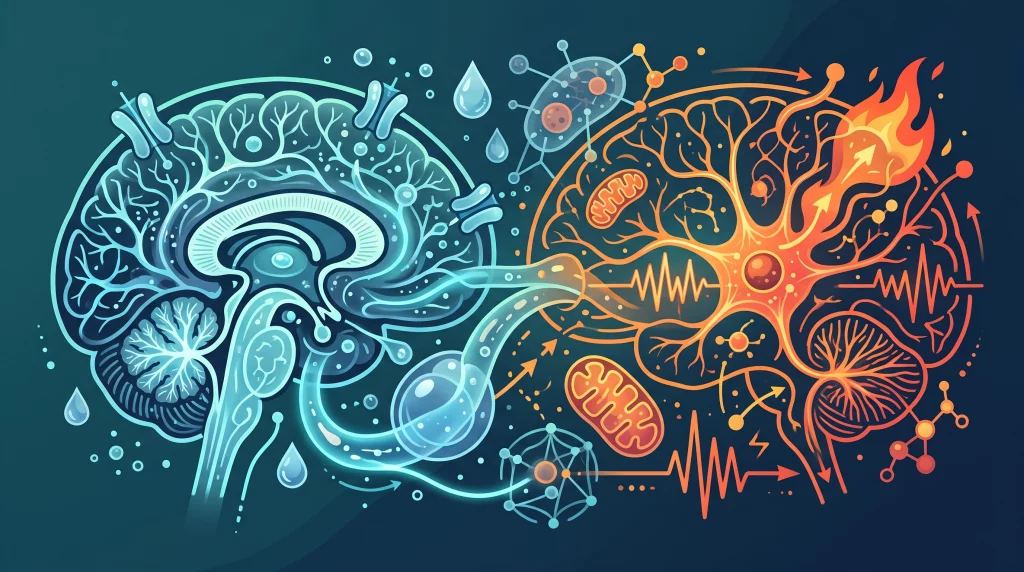
The human central nervous system operates within an exceptionally delicate homeostatic environment where water constitutes approximately 75\% of total brain mass. Tissue-specific hydration levels vary systematically across neural architecture, comprising roughly 82\% of gray matter mass and 70\% of white matter mass. Because cerebral tissue is encased within the rigid, inextensible vault of the cranium, systemic osmodynamic fluctuations exert immediate physiological stress on intracranial architecture, cerebral blood flow, and neural network connectivity. When fluid loss occurs through thermal exposure, physical exertion, or acute fluid restriction, elevated extracellular osmolality creates a hydrostatic gradient that draws water out of intracellular neural compartments. … Read more


Tags:

Beyond Plain Water: How Skim Milk and Oral Rehydration Solutions Outperform Water in Fluid Retention

The long-standing public health recommendation to rely exclusively on plain water for daily fluid balance rests on the assumption that water is the universal benchmark for hydration. However, landmark clinical research in human osmoregulation and exercise physiology has reshaped this understanding. While plain water remains essential for daily metabolism, scientific evaluation demonstrates that its rapid passage through the stomach and prompt renal excretion limit its capacity for sustained fluid retention. When individuals face prolonged periods of fluid restriction, heavy occupational workloads, thermal stress, or environments where frequent urination is impractical, the specific nutritional composition of ingested beverages dictates how effectively … Read more

Tags:

Screen-Free Evening Habits for Better Sleep and Less Stress: The Complete Science-Backed Guide

In an era dominated by constant digital connectivity, the line between waking life and rest has become increasingly blurred. Millions of adults end their days under the glow of smartphones, tablets, and televisions, scrolling through news feeds or streaming shows late into the night. While these digital routines feel like relaxation, clinical evidence demonstrates that late-night screen exposure actively disrupts human sleep architecture, heightens nighttime anxiety, and undermines physical resilience. Sleep hygiene—the practice of maintaining daily habits and environmental conditions that promote consistent, restorative rest—is fundamental to physical and psychological well-being. Establishing screen-free evening habits is one of the most … Read more

Tags:

The Power of a 15-Minute Daily Walk: Simple Steps to Stay Active

For decades, popular health advice has pushed a single, daunting goal: walk 10,000 steps every day. For busy professionals, older adults, or individuals resuming a physical routine after a prolonged period of inactivity, hitting five digits on a pedometer can feel overwhelming—and often leads to quitting before a habit ever takes root. However, a landmark wave of scientific studies is reframing how we think about daily movement. Cardiovascular researchers and exercise epidemiologists have uncovered a compelling truth: when it comes to longevity, heart health, and mental sharpness, how you walk matters just as much as how much you walk. Accumulating … Read more

Tags: