

5. Pancreatic and Liver Cancers: Cytokine-Driven Anorexia and Jaundice
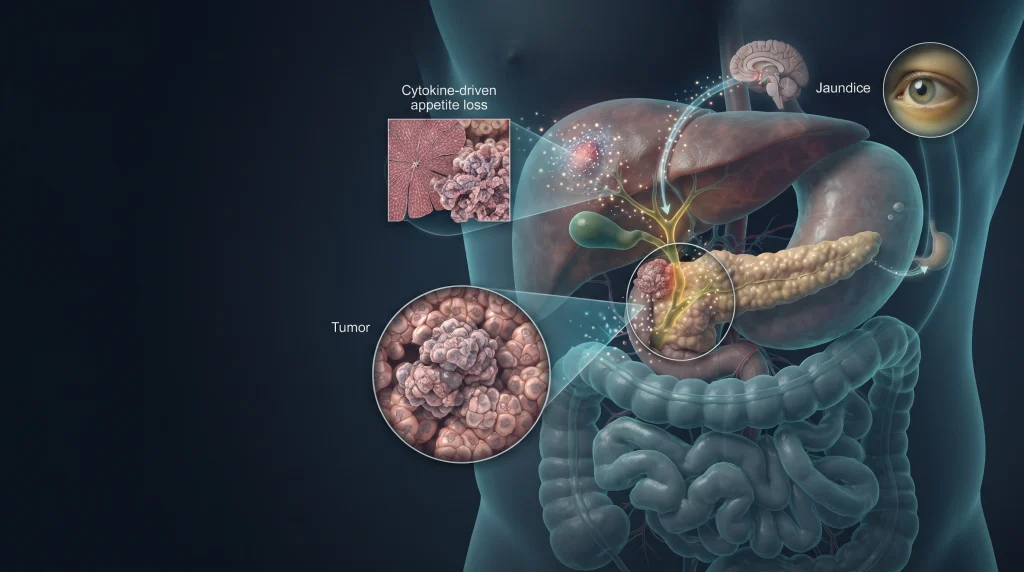
Malignancies of the pancreas and liver are among the most notoriously silent solid tumors. Situated deep in the retroperitoneum and upper abdomen, these organs accommodate silent tumor expansion until the growth interferes with biliary drainage or liver metabolic capacity.
Early Warning Signals
- Cytokine-Induced Anorexia and Rapid Weight Loss: Tumor cells and host immune responses release pro-inflammatory cytokines (such as TNF-alpha and interleukin-6) that suppress appetite pathways in the hypothalamus, leading to unintentional weight loss of 5 to 10 kg over a few months.
- Painless Obstructive Jaundice: Yellowing of the skin and whites of the eyes (sclera), dark tea-colored urine, and pale or clay-colored stools. In pancreatic head tumors, jaundice often occurs without severe pain as the growing mass compresses the common bile duct.
- Unexplained Epigastric Pain Radiation: A dull, aching pain in the upper abdomen that gradually radiates through to the middle back, often worsening when lying flat and easing when leaning forward.
- New-Onset Adult Diabetes: Sudden development of type 2 diabetes or a rapid loss of glycemic control in a patient over 50 without typical risk factors, signaling tumor-induced pancreatic tissue destruction.
Diagnostic Pathways
Diagnosis requires advanced abdominal imaging and biomarker analysis:
- Multi-Phase Abdominal CT Scan or MRI/MRCP: High-resolution cross-sectional imaging to visualize pancreatic tissue, liver parenchyma, and biliary ductal structures.
- Tumor Biomarkers: Blood tests evaluating Carcinoembryonic Antigen (CEA) and Carbohydrate Antigen 19-9 (CA 19-9) to support diagnostic evaluation and monitor treatment response.