

4. Lung Cancer: The Uninnervated Parenchyma and Chronic Cough
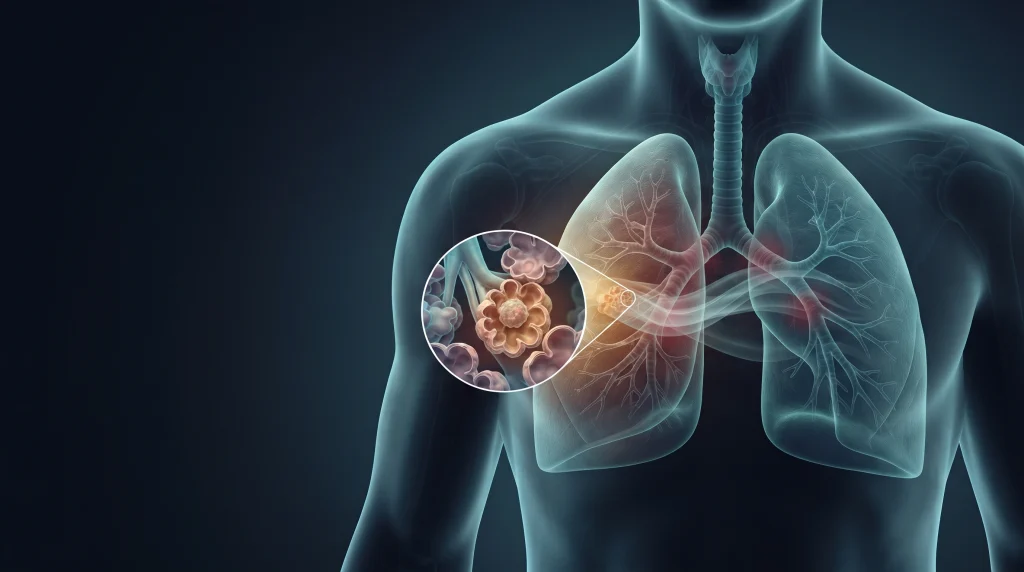
Lung cancer remains the leading cause of cancer-related mortality worldwide. Because the deep functional lung tissue (parenchyma) lacks pain fibers, a tumor can grow to several centimeters before producing physical discomfort. Pain only occurs when the growth invades the chest wall, bronchial tree, or outer pleural membrane.
Early Warning Signals
- Persistent Dry or Productive Cough: A new cough that lasts longer than 3 weeks, or a subtle change in the character, frequency, or intensity of a pre-existing “smoker’s cough.”
- Subtle Voice Hoarseness (Dysphonia): Ongoing roughness or breathiness in the voice, which occurs when a mediastinal tumor compresses the recurrent laryngeal nerve supplying the vocal cords.
- Recurrent Respiratory Infections: Persistent or repeated bouts of bronchitis or pneumonia localized to the same lung lobe, caused by tumor-induced airway narrowing and impaired mucus drainage.
- Hemoptysis: Coughing up even microscopic flecks of blood or rust-colored sputum, requiring immediate medical investigation.
Diagnostic Pathways and High-Risk Screening
For individuals with a significant smoking history (defined as 20 or more pack-years), major medical societies recommend proactive screening:
- Low-Dose Computed Tomography (LDCT): An annual, non-invasive imaging scan for eligible adults aged 50 to 80 that detects tiny, early-stage pulmonary nodules long before symptoms appear.
- Bronchoscopy and Sputum Cytology: Endoscopic visualization and tissue biopsy performed when a nodule or bronchial lesion is identified on imaging.