

6. Bladder Cancer: Painless Hematuria and Urinary Alterations
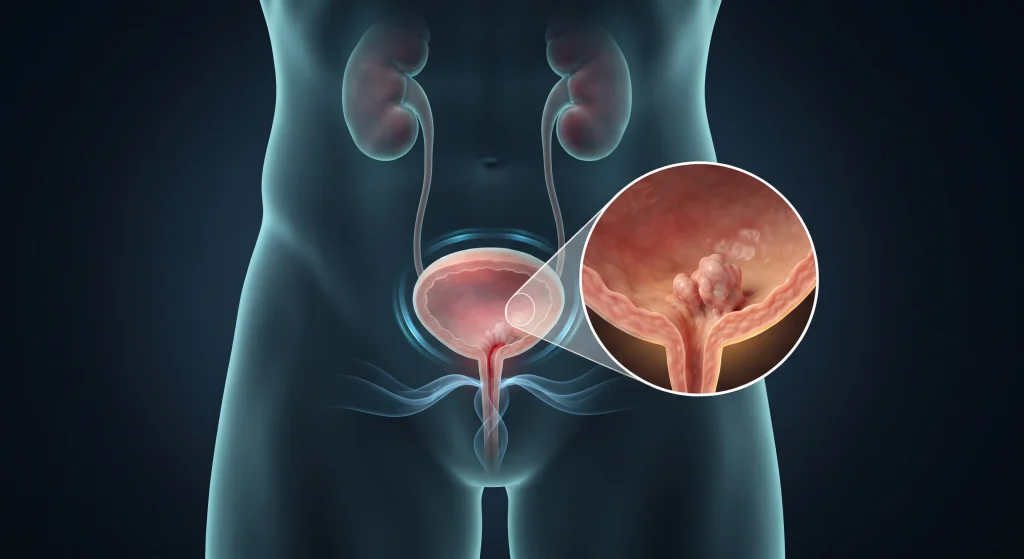
Bladder cancer primarily originates from the urothelial lining of the urinary bladder. Because early superficial urothelial tumors do not obstruct urine flow or penetrate the muscular bladder wall, they typically produce no pain or physical swelling in their initial growth phase.
Early Warning Signals
- Painless Hematuria: The presence of blood in the urine is the classic, single most common red flag for bladder cancer. The urine may appear bright pink, cola-colored, or rusty. Crucially, hematuria is frequently intermittent—appearing for one day and disappearing for weeks—leading many patients to falsely assume the issue has resolved.
- Irritative Voiding Symptoms: Persistent urinary frequency, urgency, or a burning sensation during micturition that mimics a bladder infection but fails to respond to antibiotic therapy.
- Weak Urinary Stream: Difficulty initiating urination or a weak, interrupted urine stream when a tumor sits near the bladder neck or urethral opening.
Diagnostic Pathways
Any instance of unexplained, visible or microscopic hematuria requires a thorough urological evaluation:
- Cystoscopy: The definitive diagnostic test, where a thin, lighted optical scope is inserted through the urethra to directly inspect the bladder mucosal lining and perform biopsies of suspicious areas.
- Urine Cytology: Microscopic examination of voided urine to identify shed malignant urothelial cells.