Key Takeaways:
- A healthy heart does not beat like a rigid metronome; subtle, millisecond variations between consecutive heartbeats—known as Heart Rate Variability (HRV)—reflect how smoothly your autonomic nervous system adapts to stress and recovery.
- Higher vagal tone acts as a physiological brake on the stress response, allowing you to shift out of “fight-or-flight” mode quickly once a mental or physical challenge passes.
- Slow, extended-exhale breathing, consistent sleep-wake timing, and moderate aerobic conditioning steadily strengthen vagal responsiveness without requiring complicated biofeedback gear.
When most people think about heart health, they focus on keeping their resting heart rate low and steady. Intuitively, a heartbeat that ticks along at an exact, unchanging rhythm sounds like a sign of peak efficiency.
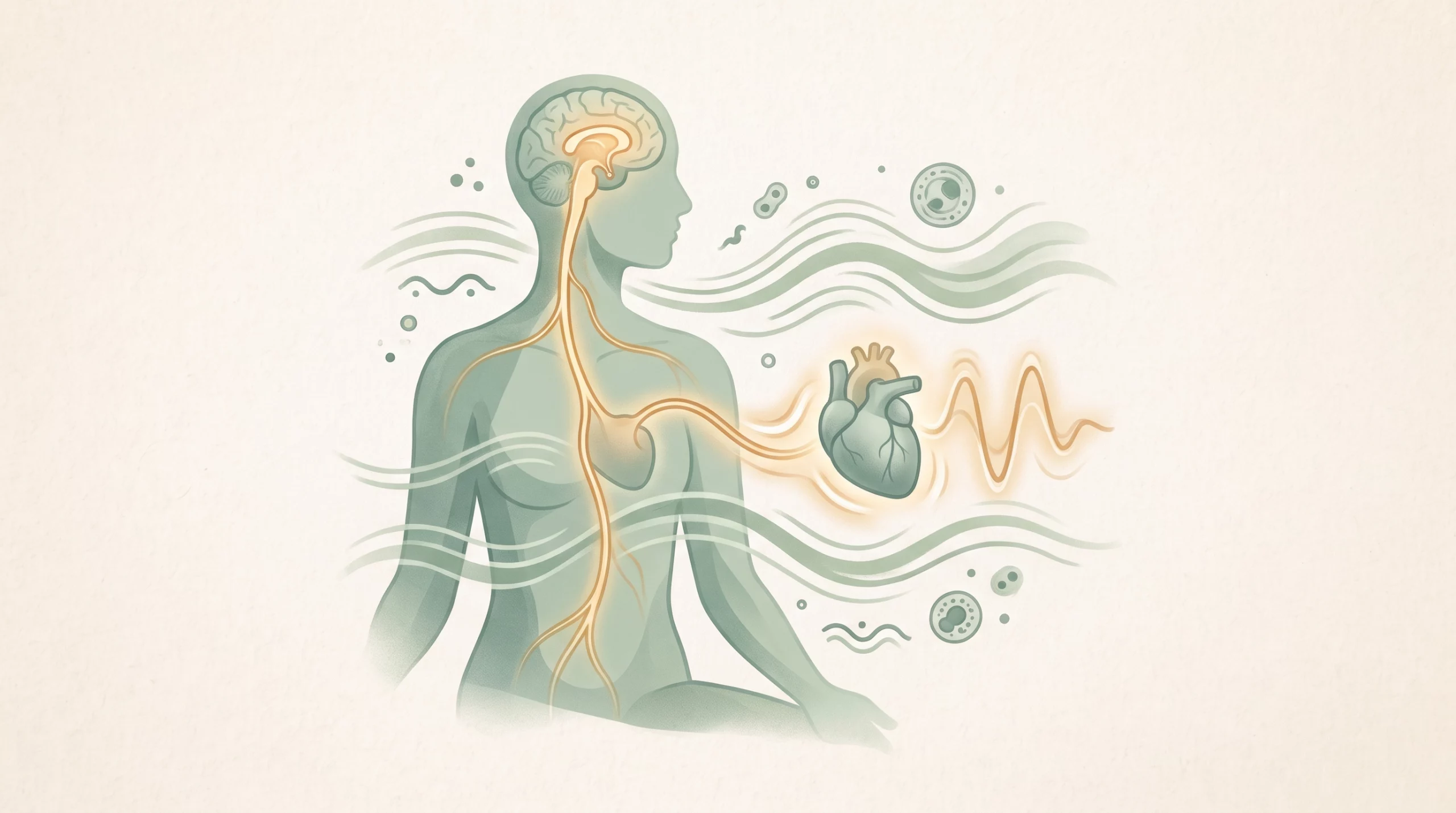
Physiologically, the opposite is true. A resilient cardiovascular and nervous system constantly adjusts the timing between beats in response to breathing, blood pressure shifts, posture, and mental load. That beat-to-beat fluctuation—measured in milliseconds as Heart Rate Variability (HRV)—is one of the clearest windows into how well your brain and body handle daily stress.
The Autonomic Tug-of-War Behind Every Heartbeat
To understand what HRV actually tracks, look at the two branches of your autonomic nervous system:
- The Sympathetic Branch (“Accelerator”): Prepares your body for action. When you face a tight deadline, heavy traffic, an intense workout, or an emotional argument, sympathetic signaling nudges heart rate up and narrows beat-to-beat variability so blood flow stays steady and predictable.
- The Parasympathetic Branch (“Brake”): Governs rest, digestion, and cellular repair. Mediated primarily by the vagus nerve, parasympathetic signaling releases acetylcholine onto the heart’s natural pacemaker, slowing the pulse slightly with every exhale and increasing beat-to-beat flexibility.
When both systems are responsive, your heart rate accelerates slightly when you inhale and slows down when you exhale—a natural rhythm known as respiratory sinus arrhythmia. High HRV indicates strong vagal tone, meaning your parasympathetic brake engages rapidly and smoothly. Low HRV suggests your nervous system is stuck with one foot lightly pressing the accelerator, even when you are sitting quietly on the couch.
Why Modern Stress Keeps the Nervous System Stuck in Low Gear
Human stress physiology evolved for short, physical bursts—escaping a threat, then returning to safety. Modern stressors rarely come with a clear physical resolution. Unanswered emails, financial pressure, late-night screen exposure, and chronic sleep debt trigger the exact same neurochemical cascade without giving the body a signal that the threat has ended.
Over months, persistent low-grade sympathetic dominance creates noticeable downstream effects:
- Fragmented Sleep Architecture: Elevated evening nervous system arousal reduces time spent in restorative slow-wave sleep, leaving you tired even after seven or eight hours in bed.
- Blunted Emotional Regulation: Lower vagal tone makes minor daily frustrations feel disproportionately overwhelming, shrinking your mental bandwidth before midday.
- Slower Physical Recovery: When parasympathetic activity stays suppressed, muscle repair, immune surveillance, and digestive motility all run below capacity.
Context and Individual Variability
One of the biggest mistakes people make with wearable HRV trackers is comparing their raw millisecond score to someone else’s.
- Baseline Is Highly Personal: Genetic factors, age, and resting heart rate heavily influence raw HRV numbers. A healthy 45-year-old might average 42 ms, while a 25-year-old endurance athlete averages 95 ms. Your personal 7- to 30-day rolling trend matters far more than a single morning reading or someone else’s chart.
- Temporary Dips Are Useful Information, Not Failure: A sharp single-day drop in HRV often reflects an acute stressor—a late heavy meal, alcohol, poor sleep, a hard leg workout, or the early stages of fighting off a virus. Viewing a dip as neutral feedback helps you adjust your day rather than adding stress over the number itself.
- Measurement Timing Matters: Because posture, caffeine, digestion, and movement immediately alter autonomic tone, the most reliable readings come first thing in the morning before getting out of bed, or overnight during steady sleep stages.
Four Evidence-Backed Ways to Strengthen Vagal Tone
You cannot force your heart rate to vary through sheer willpower, but you can train the neural pathways that govern vagal responsiveness through repeatable daily inputs:
- Practice Extended-Exhale Breathing for Five Minutes: Inhaling slightly stimulates sympathetic tone, while exhaling activates the vagus nerve. Slowing your breathing to roughly five to six breaths per minute—such as inhaling for four seconds and exhaling for six to eight seconds—mechanically stimulates vagal receptors and shifts autonomic balance within minutes.
- Build Consistent Zone 2 Aerobic Sessions Into Your Week: Steady, conversational-pace cardio strengthens cardiac stroke volume and improves baroreflex sensitivity, training your nervous system to recover faster after both physical and psychological stress.
- Anchor Your Sleep and Wake Windows: Going to bed and waking up within the same 45-minute window stabilizes circadian cortisol rhythms, preventing late-evening stress hormones from suppressing overnight parasympathetic recovery.
- Create a 30-Minute Pre-Sleep Downshift: Dimming overhead lights, stepping away from stimulating work messages, and finishing dinner at least three hours before sleep removes competing digestive and cognitive demands so the vagal brake can take over smoothly.