Key Takeaways:
- Your body does not process food the same way at 9:00 AM as it does at 9:00 PM; peripheral circadian clocks in the liver and pancreas naturally dial down insulin sensitivity after dark.
- Eating late at night forces your digestive system to work during its scheduled cellular cleanup window, disrupting the gut’s natural housekeeping wave and impairing overnight glucose clearance.
- Shifting your largest meals earlier in the day and leaving a consistent overnight fasting window improves metabolic efficiency without forcing you to cut calories or eliminate favorite foods.
When people talk about nutrition, the conversation almost always centers on what is on the plate—carbs, protein, fats, and total calories. Far fewer people pay attention to when that plate is eaten.
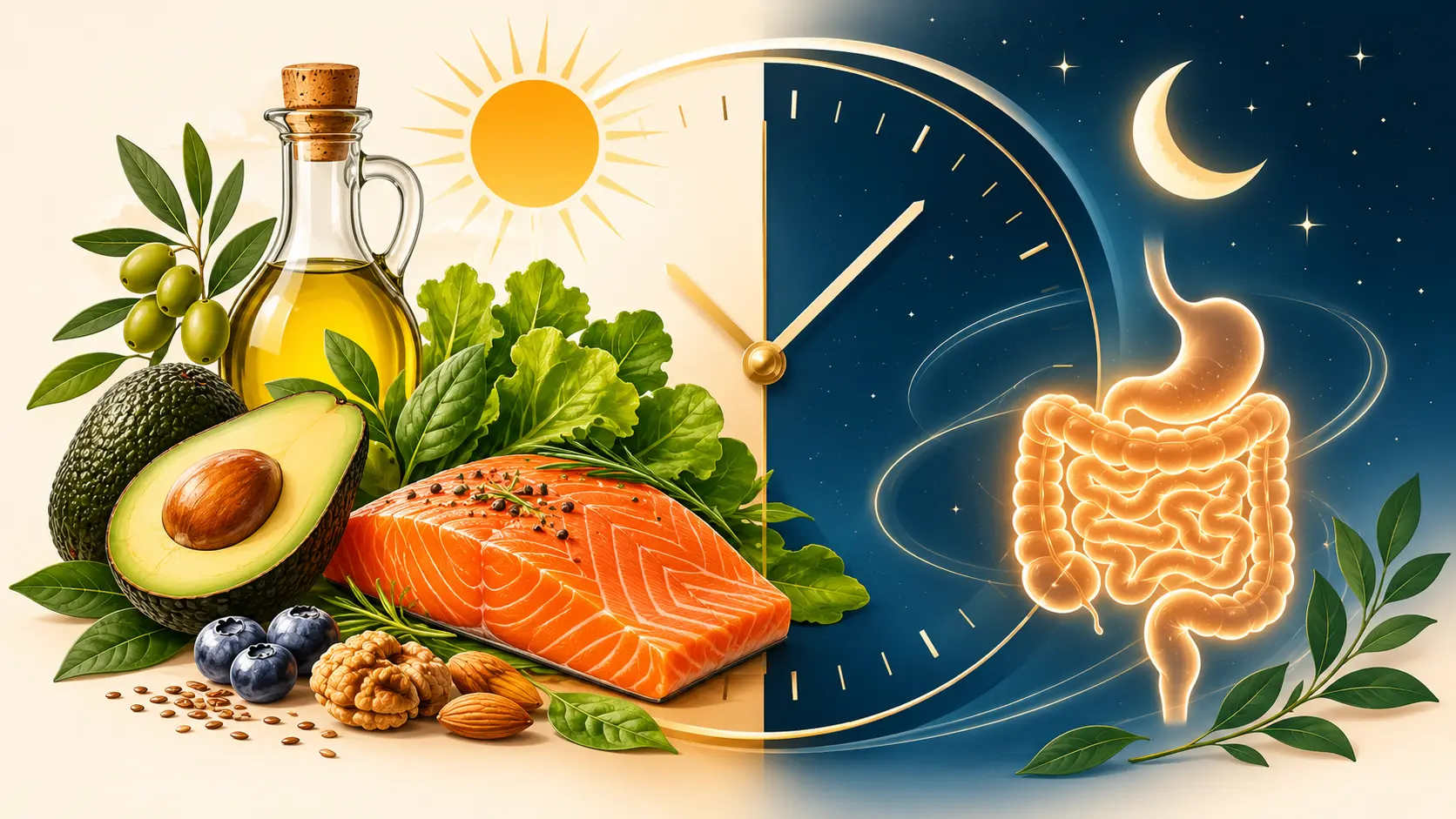
Yet your digestive tract, liver, and pancreas do not run at a steady, unchanging pace around the clock. They operate on strict 24-hour biological timers known as peripheral circadian clocks. Eating the exact same meal at breakfast versus late at night triggers two remarkably different hormonal and metabolic responses. Aligning your meal timing with your body’s internal clock is one of the most overlooked ways to improve energy, digestion, and blood sugar stability.
Why Your Metabolism Runs Differently After Dark
Most people know that the brain has a master circadian clock regulated by morning sunlight. What gets less attention is that almost every metabolic organ—including your liver, pancreas, skeletal muscle, and gut lining—has its own local clock that takes cues from when you eat.
During daylight hours, your body is primed to take in energy, break down nutrients, and shuttle glucose into muscle cells. Insulin sensitivity peaks in the morning and early afternoon.
As evening approaches and melatonin begins to rise in preparation for sleep, that metabolic machinery shifts gears:
- Slower Insulin Release: Melatonin binds directly to receptors on pancreatic beta cells, temporarily dialing down insulin secretion. When you eat a heavy, carbohydrate-rich meal at 10:00 PM, your pancreas releases less insulin than it would for that exact same meal at noon.
- Higher Post-Meal Glucose Spikes: Because insulin response is blunted at night, blood sugar stays elevated longer after late dinners, increasing oxidative stress and encouraging excess energy to be stored as liver and visceral fat.
- Reduced Thermic Effect of Food: Your body burns noticeably fewer calories digesting and processing a meal in the late evening compared to the morning, even when portion sizes are identical.
Overnight Gut Repair and the Migrating Motor Complex
Meal timing also dictates whether your digestive tract gets a chance to clean and repair itself.
Between meals—and especially during an uninterrupted overnight fast—your gastrointestinal tract activates a specialized housekeeping wave called the Migrating Motor Complex (MMC). Every 90 to 120 minutes, smooth muscle contractions sweep through the stomach and small intestine, clearing out undigested food particles, dead cells, and excess bacteria down into the colon.
Snacking late at night immediately halts this sweeping wave. Instead of resetting the gut lining and letting intestinal tight junctions recover, the digestive tract is forced back into active breakdown mode while you sleep. Over time, constantly interrupting this overnight cleanup window contributes to morning bloating, sluggish motility, and low-grade gut irritation.
Context and Individual Variability
Circadian nutrition is a flexible biological framework, not a rigid rulebook. How strictly you need to manage evening meal timing depends heavily on your daily routine and physiology:
- Evening Exercisers: If you lift weights or do intense cardiovascular training at 7:00 PM, your muscles are primed to absorb glucose through insulin-independent pathways. A post-workout dinner containing protein and carbohydrates is used primarily to replenish muscle glycogen rather than lingering in the bloodstream.
- Shift Workers and Irregular Schedules: People working night shifts experience chronic circadian misalignment. Keeping meal windows consistent—and prioritizing lighter, protein-focused meals during biological night hours—helps minimize metabolic strain when normal daytime eating is not possible.
- Baseline Metabolic Health: Individuals with existing insulin resistance or sluggish digestion tend to notice dramatic improvements from early dinner cutoffs, whereas young, highly active individuals generally tolerate later meals with fewer noticeable side effects.
Four Practical Ways to Align Meals With Your Body Clock
You do not need extreme fasting schedules to capture the benefits of circadian eating. Small shifts in daily meal distribution make a measurable difference:
- Front-Load Protein and Calories Earlier in the Day: Aim to make breakfast and lunch your most substantial meals, anchoring breakfast with 30 to 40 grams of protein. Starting the day with adequate protein stabilizes blood sugar and naturally reduces late-night cravings.
- Set a Three-Hour Buffer Before Sleep: Finish your last meal or caloric drink at least three hours before going to bed. This gives blood glucose and insulin time to return toward baseline before melatonin rises, improving both overnight metabolic recovery and deep sleep architecture.
- Keep a Consistent 12- to 14-Hour Overnight Fast: If you finish dinner by 7:30 PM, waiting until 7:30 AM or 8:30 AM for breakfast gives the Migrating Motor Complex multiple uninterrupted cycles to clear the small intestine.
- Keep Late Meals Lighter When Schedules Slip: On nights when a late dinner is unavoidable, center the meal around lean protein, healthy fats, and non-starchy vegetables rather than heavy refined starches or sugars, minimizing the glucose burden while your pancreas is winding down.