
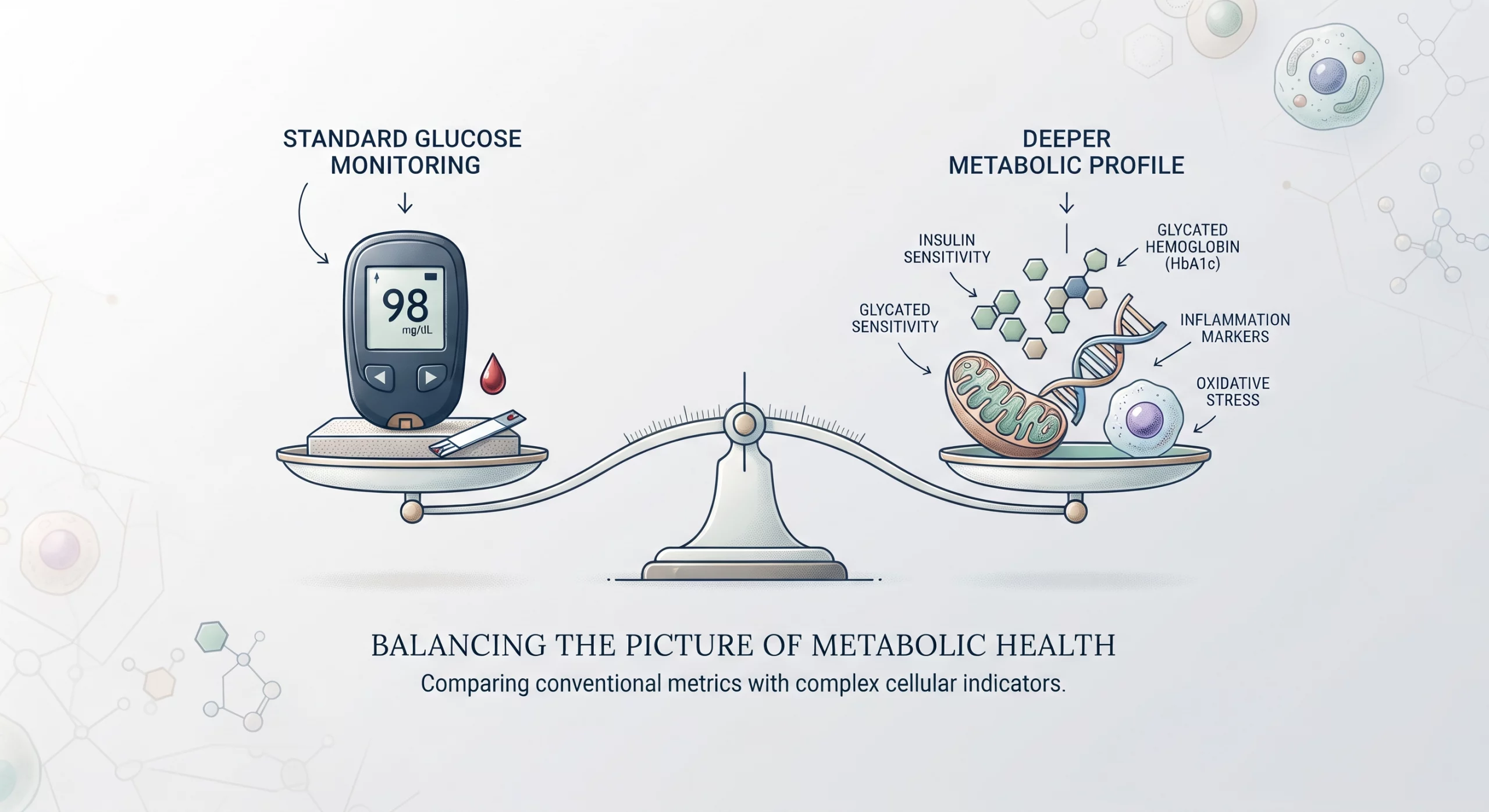
Key Takeaways:
- Standard annual blood panels rely heavily on fasting glucose, a number that can stay completely normal for up to a decade while metabolic dysfunction builds quietly in the background.
- Long before blood sugar climbs, the pancreas compensates by pumping out excess insulin—a state called hyperinsulinemia—which drives inflammation, stubborn fat storage, and afternoon energy crashes.
- Checking fasting insulin alongside your Triglyceride-to-HDL ratio shows where your metabolic health is actually heading years before a basic glucose test catches a problem.
When most people scan their annual lab results, their eyes go straight to one line: Fasting Blood Glucose. If that number sits below 100 mg/dL, the usual takeaway is reassuring—everything looks fine, come back next year.
Metabolic dysfunction rarely starts the day your blood sugar crosses into the prediabetic range. By the time fasting glucose finally ticks upward, the underlying shifts in your body have often been unfolding quietly for ten to fifteen years. Understanding how insulin resistance develops gives you a chance to spot those early warning signs long before a formal diagnosis enters the picture.
How the Pancreas Masks Early Dysfunction
To see why fasting glucose is such a lagging indicator, look at the relationship between glucose and insulin.
Every time you eat carbohydrates—and to a lesser degree, protein—glucose enters your bloodstream. Your pancreas responds by releasing insulin, a hormone that acts like a key, unlocking muscle, fat, and liver cells so they can pull that glucose in and use it for fuel.
Over time, chronically high energy intake, ongoing stress, poor sleep, or long stretches of sitting can make your cells less responsive to insulin’s signal. The locks get stiff.
Rather than letting glucose linger in the bloodstream where it can cause damage, the pancreas compensates by working harder. It pumps out two, three, or even four times the usual amount of insulin just to force those stubborn cellular doors open.
During this stretch—known as compensated hyperinsulinemia—your fasting blood sugar stays comfortably inside the normal range, often right between 85 and 95 mg/dL. On paper, you look metabolically healthy. Beneath the surface, all that extra circulating insulin is quietly reshaping how your body operates:
- Locked Fat Stores: High insulin blocks lipolysis, the process your body uses to break down stored fat. Losing weight becomes frustratingly difficult, even when you keep a close eye on calories.
- Post-Meal Crashes: Heavy insulin surges frequently overshoot the mark, driving blood sugar down too quickly an hour or two after you eat. The result is familiar: heavy afternoon brain fog and sudden sugar cravings.
- Silent Vascular Strain: Chronically elevated insulin tells the kidneys to hold onto sodium and nudges the sympathetic nervous system into overdrive, gradually pushing blood pressure higher.
Only when pancreatic beta cells become exhausted and can no longer keep up this heavy output does fasting blood glucose finally start to rise.
Why Two People Can Have Very Different Thresholds
Metabolic flexibility varies widely from person to person. Two people eating the same diet at the exact same body weight can show completely different insulin responses depending on a few key biological variables:
- Skeletal Muscle Mass: Muscle is your body’s primary glucose sink, clearing roughly 70% to 80% of post-meal blood sugar. People with less muscle mass simply have less storage space, leaving them vulnerable to insulin resistance even at a normal body weight—a pattern often called TOFI (Thin Outside, Fat Inside).
- Sleep and Cortisol: Even a single week of short sleep (under six hours a night) measurably dulls peripheral insulin sensitivity. Meanwhile, elevated evening cortisol signals the liver to release stored glucose, forcing the pancreas to secrete extra insulin overnight.
- Genetics and Hormones: A family history of Type 2 diabetes, hormonal shifts during perimenopause, or conditions like PCOS all heavily influence baseline insulin signaling.
Three Better Markers to Ask Your Doctor About
If you want a realistic look at where your metabolic health is heading instead of waiting around for a lagging glucose number, ask your doctor to include these three markers on your next preventive blood panel:
| Biomarker | What It Measures | Why It Matters Early |
|---|---|---|
| Fasting Insulin | How much insulin your pancreas has to produce to keep blood sugar normal overnight. | Often climbs years before glucose or HbA1c budges. Optimal levels generally sit below 8–10 µIU/mL, well under standard lab upper limits. |
| Triglyceride-to-HDL Ratio | Calculated directly from a standard lipid panel (Triglycerides ÷ HDL cholesterol). | High triglycerides paired with low HDL closely track with liver insulin resistance. A ratio under 1.5 (in mg/dL) typically points to strong insulin sensitivity. |
| HbA1c (Glycated Hemoglobin) | Your average blood sugar attachment to red blood cells over roughly 90 days. | Catches post-meal blood sugar spikes that a single morning fasting draw will completely miss. |
Practical Ways to Restore Insulin Sensitivity
Early insulin resistance responds remarkably well to targeted daily habits. Because working muscles can pull glucose out of the bloodstream without needing insulin at all, physical movement gives you a direct workaround for stiff insulin receptors.
- Take a Short Walk After Meals: A brisk 10- to 15-minute walk within 30 minutes of finishing your biggest meal activates GLUT4 transporters in your leg muscles. Those transporters pull glucose straight out of your blood, taking immediate pressure off your pancreas.
- Eat Protein and Fiber First: Starting a meal with fibrous vegetables and lean protein before touching starches slows down how quickly food leaves your stomach. That flattens your post-meal glucose curve and prevents the sharp spikes that trigger massive insulin dumps.
- Lift Weights Consistently: Resistance training—whether with weights or bodyweight—two to three times a week builds both muscle tissue and glycogen storage capacity, giving your body a much larger buffer for handling carbohydrates.
- Leave an Overnight Fasting Window: Spacing dinner and breakfast 12 to 14 hours apart gives circulating insulin enough time to fall back to baseline, letting your body shift smoothly from storing energy to burning fat and handling cellular repair.