
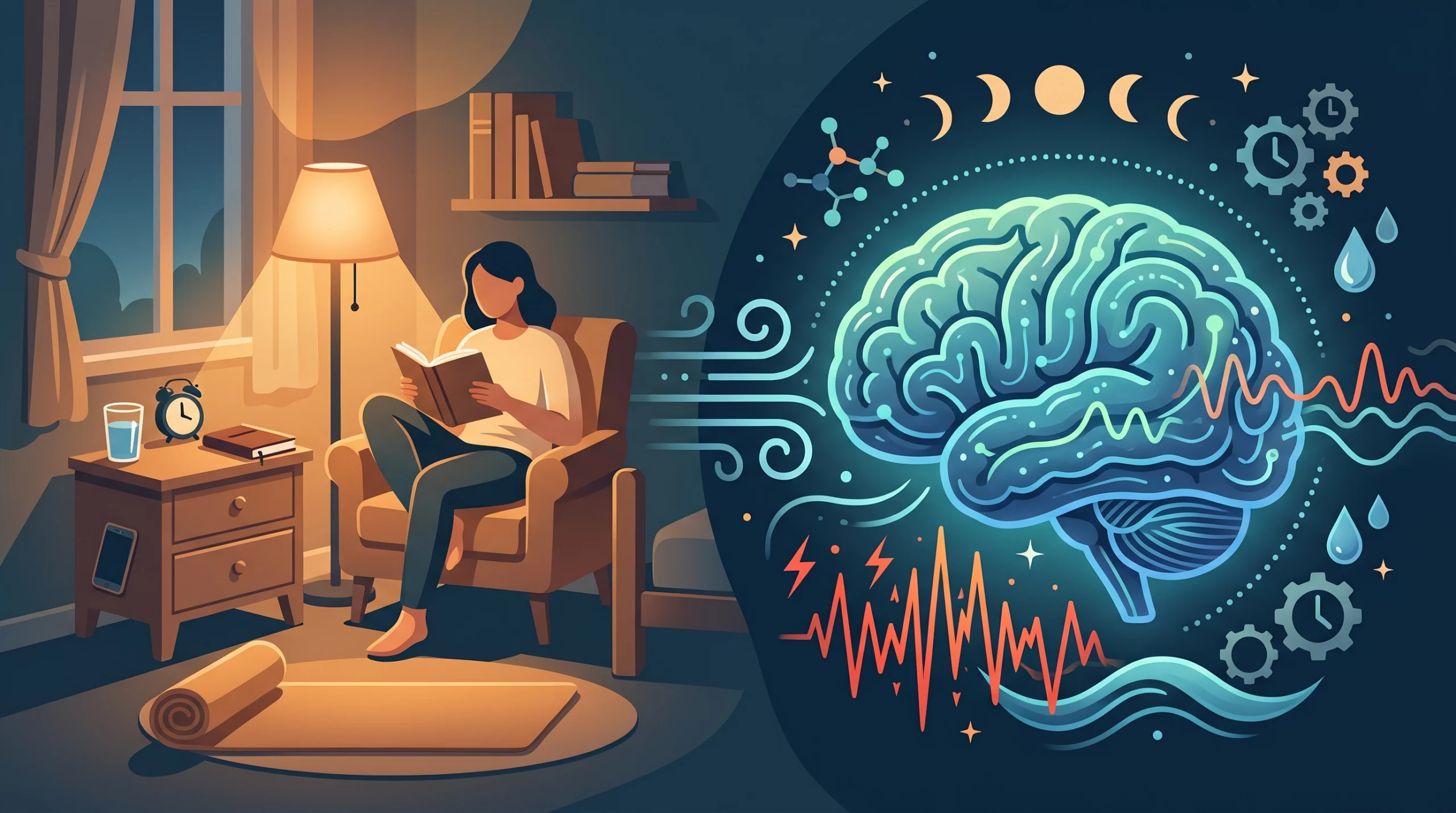
In an era dominated by constant digital connectivity, the line between waking life and rest has become increasingly blurred. Millions of adults end their days under the glow of smartphones, tablets, and televisions, scrolling through news feeds or streaming shows late into the night. While these digital routines feel like relaxation, clinical evidence demonstrates that late-night screen exposure actively disrupts human sleep architecture, heightens nighttime anxiety, and undermines physical resilience.
Sleep hygiene—the practice of maintaining daily habits and environmental conditions that promote consistent, restorative rest—is fundamental to physical and psychological well-being. Establishing screen-free evening habits is one of the most impactful interventions available for restoring natural sleep cycles and lowering stress levels. This comprehensive guide explores the biological mechanisms behind screen-induced sleep disruption, reviews findings from clinical studies, and provides a practical framework for creating a screen-free evening routine.
1. The Neuroscience of Nighttime Screen Use
Understanding why electronic devices interfere with sleep requires examining how the human brain regulates wakefulness and rest. Sleep timing is controlled by circadian rhythms, an internal 24-hour biological clock governed by light exposure, hormonal secretions, and neural arousal pathways. Late-night screen interaction disrupts this system through two main mechanisms: biological light sensitivity and cognitive hyperarousal.
Blue Light Wavelengths and Melatonin Suppression
Electronic screens emit short-wavelength blue light, situated within the 400 to 490 nanometer spectrum. Biological research conducted by sleep medicine specialists at Sutter Health notes that the human brain contains specialized light-sensitive areas within the suprachiasmatic nucleus that are uniquely sensitive to blue light. During natural daylight hours, blue light promotes alertness by stimulating the production of cortisol.
When the sun sets, the brain’s pineal gland is biologically programmed to release melatonin, the essential hormone responsible for signaling to the body that it is time to sleep. However, staring at a brightly lit screen within two hours of bedtime deceives the brain into perceiving daylight. This light exposure slows or halts melatonin secretion, delaying the natural transition into sleep and altering normal sleep latency.
Cognitive Stimulation and Adrenaline Spikes
Beyond the physical light emitted by screens, the psychological content consumed on devices creates a secondary, equally disruptive physiological state. Engaging with interactive media—such as replying to work emails, reading intense news updates, scrolling social media feeds, or playing video games—activates the central nervous system.
Research compiled by the National Sleep Foundation highlights that interactive digital tasks stimulate dopamine reward pathways and trigger stress hormones like cortisol and adrenaline. Instead of transitioning into a parasympathetic state of calm, the brain remains in a high-alert, problem-solving mode. Sounds, bright visual transitions, and push notifications keep the mind hyper-vigilant, making it difficult to achieve the mental stillness required for restorative sleep.
2. What Clinical Science and Studies Reveal
Recent epidemiological research underscores the scale of screen-induced sleep deprivation and its consequences for public health. Institutional data from the Centers for Disease Control and Prevention indicates that more than one-third of adults in the United States fail to achieve the recommended seven to nine hours of nightly sleep. Clinical surveys further reveal that 14.5% of adults struggle with falling asleep, while 17.8% regularly experience trouble staying asleep.
Recent Clinical Data on Screen Time and Sleep Quality
Comprehensive multi-center studies published in major medical journals highlight a direct correlation between evening device usage, shortened sleep duration, and heightened insomnia risk.
| Study & Source Institution | Sample Size & Demographic | Key Research Findings | Quantified Sleep Impact |
|---|---|---|---|
| Frontiers in Psychiatry Study (2025) (Reported by AASM Sleep Education) | ~40,000 University Students (Norway) | Examined in-bed device activities (social media, streaming, studying, gaming). | 59% higher insomnia risk per extra hour of screen time; 24 minutes of lost sleep per night. |
| JAMA Network Open Study (2025) (Reported by AASM Sleep Education) | National Adult Sample (United States & Puerto Rico) | Evaluated bedtime screen usage versus screen avoidance across adult populations. | 33% higher rate of poor sleep quality; ~50 minutes of lost sleep per week. |
| Sleep in America Poll (2022) (National Sleep Foundation) | Representative U.S. Adult Population | Assessed daily and evening artificial light exposure from screens. | 58% look at screens within 1 hour of bed; 68% use screens throughout the evening. |
| Sleep Prioritization Survey (2023) (American Academy of Sleep Medicine) | U.S. Adult Survey | Evaluated bedroom technology habits and nighttime media consumption. | 87% sleep with phones in the bedroom; 91% admit to staying up late binge-watching TV. |
Long-Term Health Consequences of Sleep Deprivation
Consistent sleep loss extends far beyond morning grogginess. Public health guidelines from the CDC and medical literature from Harvard Health emphasize that chronic sleep deficiency impairs immune function, compromises memory consolidation, and increases the long-term risk of severe medical conditions, including:
- Cardiovascular Disease: Elevated risk of hypertension, coronary heart disease, and stroke.
- Metabolic Disorders: Impaired glucose tolerance and an increased risk of developing Type 2 diabetes.
- Mental Health Decline: Heightened susceptibility to chronic anxiety, mood instability, and clinical depression.
- Cognitive Impairment: Reduced concentration, impaired executive function, and increased likelihood of daytime accidents.
3. The 4-Pillar Screen-Free Evening Wind-Down Routine
Replacing digital screens requires introducing positive, low-stimulation habits that signal to the brain that the day is concluding. Sleep experts from Harvard Health and the National Sleep Foundation recommend dedicating 30 to 60 minutes before bed to a structured wind-down routine.
The four-stage timeline below provides an actionable framework to transition from active evening work to restful sleep.
The 60-Minute Screen-Free Wind-Down Timeline
- T-60 Minutes (Digital Curfew): Enforce a strict cut-off for phones, tablets, and televisions.
- T-45 Minutes (Mental Offloading): Journal worries, map out tomorrow’s tasks, and clear cognitive clutter.
- T-30 Minutes (Somatic Relaxation): Take a warm shower or bath, and perform gentle stretching or bedtime yoga.
- T-15 Minutes (Analog Rest): Read a physical book under soft light or listen to soothing audio/meditation.
Pillar 1: Enforce a Strict “Digital Curfew” (T-60 Minutes)
Establish a non-negotiable cut-off time for all electronic devices at least 60 minutes before going to sleep. Turn off televisions, close laptops, and set mobile phones to silent or “Do Not Disturb” mode to prevent notifications from disrupting your evening. If phone alarms are necessary, set them prior to starting your wind-down routine and place the device out of physical reach.
Pillar 2: Practice “Brain-Dump” Journaling for Stress Relief
Cognitive arousal often stems from unorganized thoughts, work anxieties, and lingering to-do lists. Clinical guidance from NHS Every Mind Matters highlights writing as an effective psychological offloading technique. Spending 5 to 10 minutes recording thoughts or mapping out priorities for the following day externalizes worries, reducing nocturnal mental chatter and lowering bedtime stress.
Pillar 3: Engage in Somatic and Thermal Relaxation
Physical tension actively prevents the body from transitioning into deep sleep. Incorporating gentle somatic practices helps relax muscles and regulate body temperature:
- Take a Warm Bath or Shower: Bathing in warm water relaxes tight muscles. As you cool down afterward, your core body temperature naturally drops—a biological trigger that induces sleepiness.
- Perform Gentle Stretching or Bedtime Yoga: Slow, intentional stretches release accumulated muscle strain without elevating heart rate or wakefulness.
- Practice Deep Breathing Exercises: Techniques such as box breathing or slow abdominal breathing stimulate the vagus nerve, promoting parasympathetic relaxation.
Pillar 4: Focus on Low-Stimulation Analog Activities
Fill the remaining minutes before sleep with calming, non-digital pursuits:
- Read Physical Print: Read a book, magazine, or physical paper under soft, warm lighting. Avoid e-readers with backlit screens.
- Listen to Calming Audio: Play ambient sounds, soft instrumental music, or guided relaxation audio (such as the NHS Beditation routine) while keeping the screen face down or turned off.
4. Designing a Disruption-Free Sleep Sanctuary
An effective evening routine must be paired with an optimal bedroom environment. Sleep researchers emphasize that the bedroom should serve as a dedicated sanctuary optimized for dark, quiet, and cool conditions.
Environmental Controls for Optimal Sleep
Guidance from Harvard Health Publishing outlines specific environmental parameters to maximize sleep efficiency:
- Room Temperature: Maintain a bedroom temperature between 65°F and 68°F (18.3°C to 20°C). Cooler ambient air aligns with the body’s natural temperature drop during sleep.
- Lighting Management: Install blackout curtains or wear a soft eye mask to eliminate external light pollution. Use warm, low-wattage lamps during the hour before bed rather than bright overhead lights.
- Sound Regulation: Use heavy rugs or curtains to absorb ambient noise. If external sounds are unavoidable, utilize white noise machines or earplugs to create a steady acoustic environment.
Re-establishing the Bed-Sleep Connection
A core principle of cognitive behavioral therapy for insomnia (CBT-I) is maintaining a strong mental association between the bed and sleep. Healthline medical experts advise limiting bed usage exclusively to sleep and intimacy. Working, eating, watching television, or browsing phones in bed weakens this psychological connection, training the brain to view the bed as a place of wakefulness and activity.
Furthermore, keeping mobile devices off the nightstand reduces the temptation to check emails or scroll during middle-of-the-night awakenings. Utilizing a traditional analog alarm clock allows smartphones to be charged in another room entirely.
5. Troubleshooting Bedtime Anxiety and Staying Consistent
Transitioning away from evening screen use can initially feel challenging, especially for individuals accustomed to digital stimulation. Overcoming common obstacles requires clear strategies and consistency.
Managing the “20-Minute Rule” for Awake Time
If you find yourself lying awake in bed tossing and turning for more than 20 minutes, avoid forcing sleep. Staying in bed while feeling frustrated increases anxiety and reinforces the association between the bed and wakefulness.
As recommended by NHS Every Mind Matters and Healthline, get out of bed and move to a dimly lit room. Engage in a quiet, non-screen activity—such as reading on the couch or listening to soft music—until drowsiness returns. Return to bed only when you feel genuinely sleepy.
Daytime Habits That Support Nighttime Rest
Nighttime sleep hygiene is heavily influenced by daytime behaviors. To reinforce your circadian rhythm throughout the day:
- Morning Sunlight Exposure: Obtain at least 30 minutes of natural sunlight exposure in the morning to anchor your biological clock and promote evening melatonin production (CDC recommendation).
- Strategic Caffeine Management: Avoid consuming caffeinated beverages within 8 hours of bedtime, as caffeine metabolizes slowly and disrupts deep sleep stages.
- Consistent Sleep Schedules: Maintain regular sleep and wake times seven days a week, including weekends, to reinforce steady circadian rhythms.
6. Summary of Key Sleep Hygiene Best Practices
The following reference table summarizes essential screen-free habits and environmental practices for quick daily reference.
| Focus Area | Recommended Practice | Core Biological & Psychological Benefit |
|---|---|---|
| Digital Curfew | Turn off all screens 30–60 minutes before bed. | Prevents blue light melatonin suppression and cognitive hyperarousal. |
| Stress Offloading | Write down tasks and anxieties in a journal before bed. | Externalizes worry, clearing mental chatter prior to sleep onset. |
| Thermal Relaxation | Take a warm bath or shower 1 hour before bed. | Post-bath body cooling triggers natural biological drowsiness. |
| Sleep Sanctuary | Keep bedroom dark, quiet, and cooled to 65°F–68°F. | Supports uninterrupted sleep architecture and temperature regulation. |
| Bed Association | Reserve bed strictly for sleep and intimacy; remove phones. | Strengthens psychological association between bed and rapid sleep onset. |
| Daylight Anchor | Get 30 minutes of morning daylight exposure. | Anchors circadian rhythm for consistent nighttime melatonin release. |
By committing to a screen-free evening routine and optimizing your sleep environment, you can lower nighttime stress, protect your circadian rhythm, and experience the profound physical and mental benefits of restorative sleep.
Sources :
- https://www.health.harvard.edu/healthy-aging-and-longevity/sleep-hygiene-simple-practices-for-better-rest
- https://www.healthline.com/health/sleep-hygiene
- https://www.cdc.gov/sleep/about/index.html
- https://www.nhs.uk/every-mind-matters/mental-wellbeing-tips/how-to-fall-asleep-faster-and-sleep-better
- http://thensf.org/screen-use-disrupts-precious-sleep-time/