
Introduction
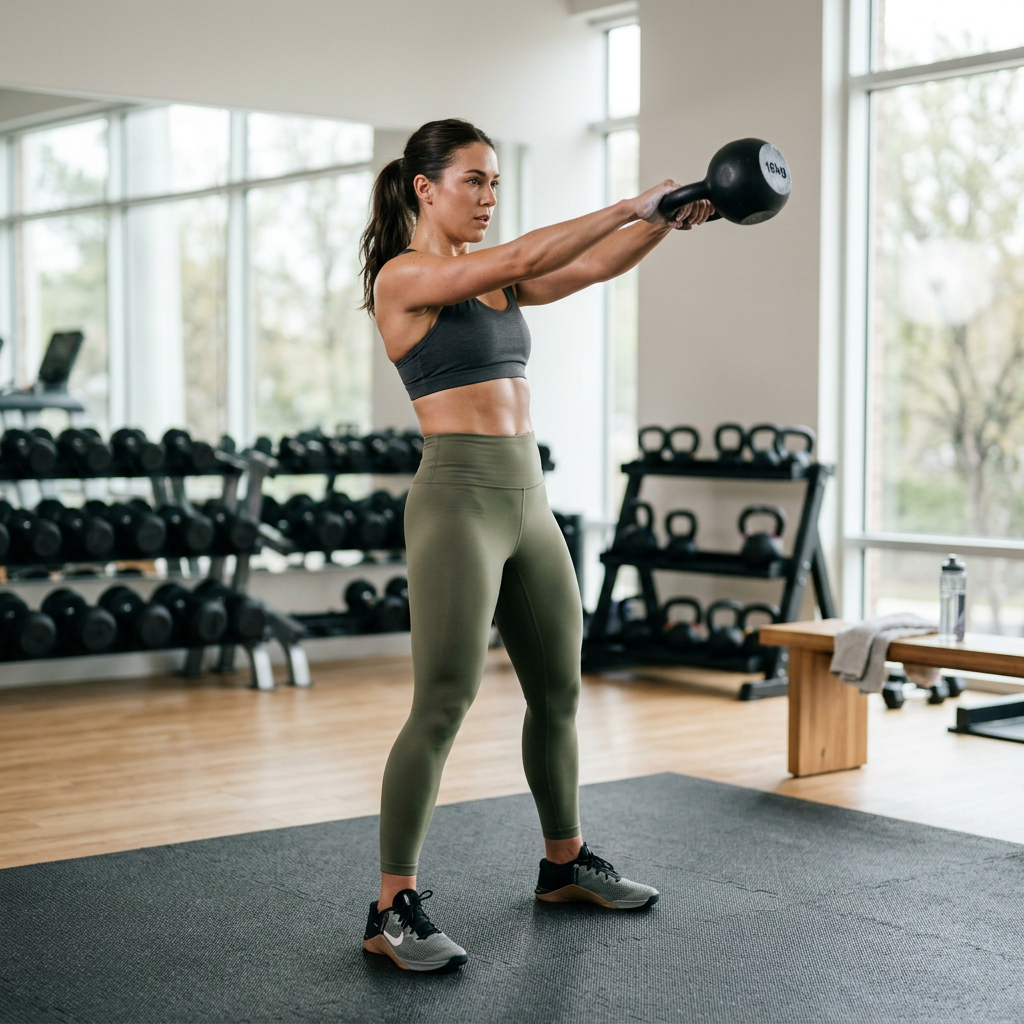
A well-designed 30-Minute Full Body Workout Plan is one of the most efficient ways to build strength, improve conditioning, and manage body fat when you are short on time. Instead of splitting your training into separate “leg days” and “arm days,” a full body approach allows you to hit all major muscle groups in a single, focused session.
Shorter, structured workouts can be just as effective as longer gym sessions when they are planned intelligently. By pairing compound exercises, using minimal rest, and managing intensity, you stimulate your muscles, challenge your cardiovascular system, and burn a meaningful number of calories in only half an hour. This makes it ideal for busy professionals, parents, and anyone who struggles to fit fitness into their schedule.
This guide walks you step-by-step through a practical 30-minute routine, explains why it works, and shows you how to schedule it across the week, avoid common mistakes, and progress safely over time for long-term results.
Why This Method/Workout Works
The effectiveness of a 30-Minute Full Body Workout Plan comes from strategic exercise selection and smart use of training variables—sets, reps, tempo, and rest. When you combine multi-joint (compound) movements with a moderate to high work density, you get strong training stimuli in a short window.
1. Compound Exercises for Maximum Efficiency
- Squats, deadlifts/hip hinges, push-ups, rows, and presses involve several muscle groups at once.
- This recruits more total muscle mass, which:
- Improves strength across the entire body
- Burns more calories per minute than isolation exercises
- Teaches your body to move better in daily life
2. Full Body Frequency for Better Progress
Training each major muscle group multiple times per week generally supports better strength and hypertrophy gains than hitting a muscle only once weekly, especially for non-advanced trainees. A full body workout three times per week ensures:
- More frequent practice of key movement patterns
- Regular stimulation of muscle protein synthesis
- Enough rest days for recovery, since no single session is excessively long
3. Time-Efficient Calorie Burn and Conditioning
Short rest periods and circuit-style programming elevate heart rate while you lift. You get:
- Cardio and strength work in one session
- Better work capacity and endurance
- A practical approach to fat loss when paired with appropriate nutrition
4. Sustainable Intensity, Not Exhaustion
The goal is not to destroy yourself every session. The structure below keeps intensity “challenging but repeatable,” which:
- Reduces injury risk
- Supports consistency, the key driver of long-term results
- Allows progression in load, reps, or density over time
Step-by-Step Workout Plan or Strategy
Below is a complete 30-Minute Full Body Workout Plan you can follow 3 days per week (for example, Monday, Wednesday, Friday). It requires only basic equipment: dumbbells or kettlebells and, ideally, a bench or sturdy surface.
Overall Session Structure (30 Minutes)
- Warm-Up: 5 minutes
- Strength & Muscle Circuit A: 12 minutes
- Strength & Muscle Circuit B: 10 minutes
- Finisher & Core: 3 minutes
1. Warm-Up (5 Minutes)
Aim to elevate your heart rate and mobilize key joints. Move continuously with minimal rest.
- 1 minute brisk marching or light jogging in place
- 1 minute bodyweight squats (slow and controlled)
- 1 minute alternating reverse lunges
- 1 minute arm circles (30 seconds forward, 30 seconds backward) and shoulder rolls
- 1 minute walkouts to plank (hinge, walk hands out to plank, return)
2. Circuit A – Lower Body Push, Upper Body Push, Hinge (12 Minutes)
Set a timer for 12 minutes. Move through the three exercises in order, resting 20–30 seconds between movements as needed. Repeat the circuit as many quality rounds as you can while maintaining good form (typically 3–4 rounds).
Exercise A1: Goblet Squat
- Muscles: Quads, glutes, core
- Equipment: Dumbbell or kettlebell
- Sets/Reps: 8–12 reps each round
Hold the weight at chest level, feet shoulder-width apart. Sit your hips down and slightly back, keeping chest tall and knees tracking over toes. Drive through your mid-foot to stand up. Avoid collapsing your knees inward.
Exercise A2: Push-Up (Incline or Floor)
- Muscles: Chest, shoulders, triceps, core
- Equipment: Floor or bench
- Sets/Reps: 6–12 reps each round
Start in a straight-line plank from head to heels, hands slightly wider than shoulder-width. Lower your chest toward the floor or bench, elbows at about 45 degrees from your torso. Push the floor away, keeping your core braced. Use an incline (hands on bench) if full push-ups are too challenging.
Exercise A3: Romanian Deadlift (RDL)
- Muscles: Hamstrings, glutes, lower back
- Equipment: Dumbbells or kettlebells
- Sets/Reps: 8–12 reps each round
Stand tall holding weights in front of your thighs. Unlock your knees slightly, then hinge at the hips, pushing them back as the weights travel down the front of your legs. Keep your spine neutral. Stop when you feel a strong hamstring stretch and return to standing by driving hips forward.
3. Circuit B – Row, Lunge, Overhead/Vertical Push (10 Minutes)
Set a timer for 10 minutes. Cycle through the three exercises. Rest 20–30 seconds between moves as needed and aim for 2–3 solid rounds.
Exercise B1: Dumbbell Bent-Over Row
- Muscles: Upper back, lats, biceps, rear delts
- Equipment: Dumbbells
- Sets/Reps: 8–12 reps
Hinge at the hips with a flat back, chest angled toward the floor. Let the dumbbells hang. Row them toward your ribs, squeezing your shoulder blades together. Control the lowering phase and avoid shrugging your shoulders.
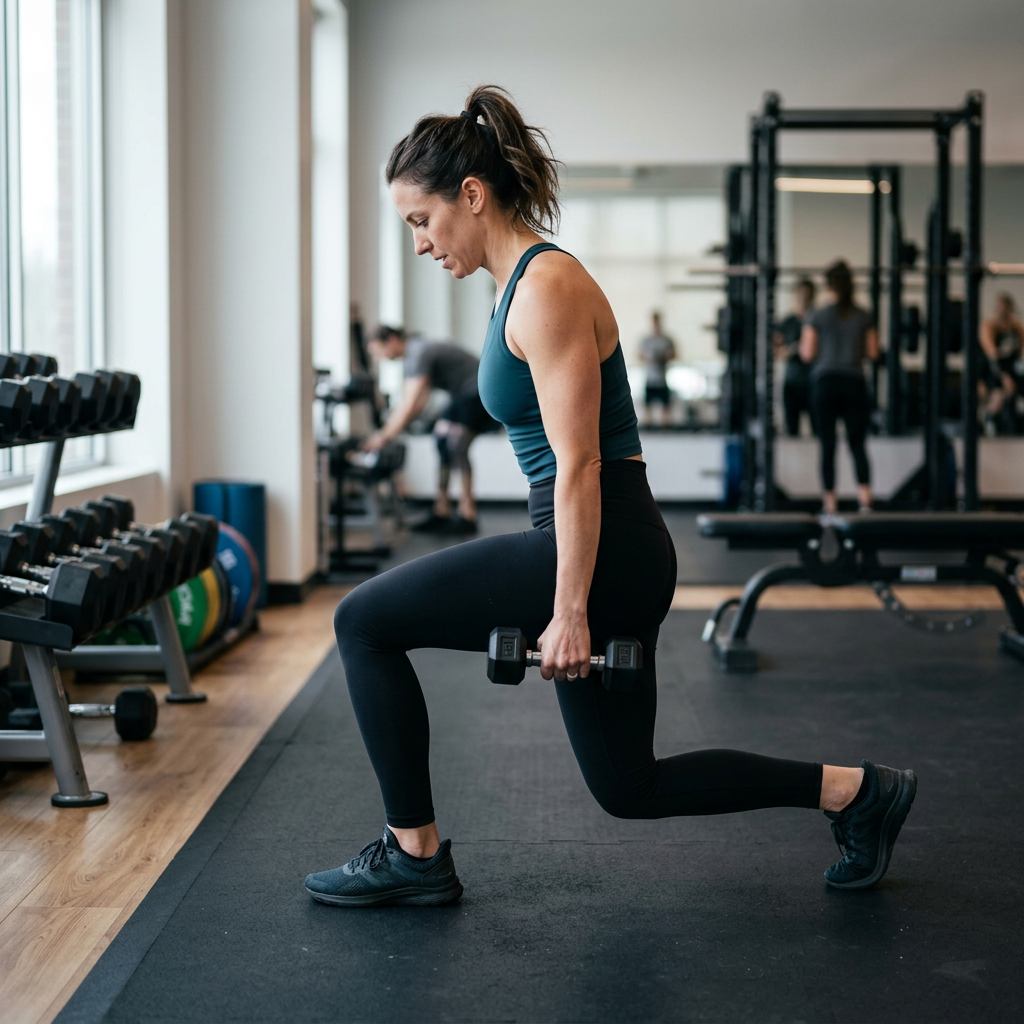
Exercise B2: Reverse Lunge (Alternating)
- Muscles: Glutes, quads, hamstrings, core
- Equipment: Bodyweight or dumbbells
- Sets/Reps: 6–10 reps per leg
Step one leg back and lower your back knee toward the floor, keeping your front knee stacked over your front ankle. Push through the front heel to return to standing. Alternate sides each rep. Use support (holding a wall) if needed for balance.
Exercise B3: Dumbbell Overhead Press (Standing or Seated)
- Muscles: Shoulders, triceps, upper chest, core
- Equipment: Dumbbells
- Sets/Reps: 8–10 reps
Hold dumbbells at shoulder height, palms facing forward or slightly in. Brace your core and press the weights overhead until your arms are nearly straight. Lower under control. Avoid excessive arching of your lower back by squeezing glutes and keeping ribs down.
4. Finisher & Core (3 Minutes)
Finish with a short conditioning and core block to challenge your cardiovascular system and trunk stability.
- 30 seconds: Mountain climbers
- 30 seconds: Forearm plank hold
- 30 seconds: High-knee marches or jog
- 30 seconds: Side plank (15 seconds per side)
- Repeat once if time allows
Intensity Guidelines
- Choose loads that leave 1–3 reps “in the tank” at the end of each set.
- You should be breathing hard but still able to say a short sentence.
- Focus on quality movement over racing against the clock.
Weekly Schedule Example (if applicable)
Here is a simple way to structure this 30-Minute Full Body Workout Plan across the week. Adjust days based on your schedule, but try to keep at least one rest day between strength sessions.
3-Day Full Body Schedule
- Monday: 30-minute full body workout (Plan above)
- Tuesday: Light activity (walking, cycling, easy yoga, 20–40 minutes)
- Wednesday: 30-minute full body workout
- Thursday: Rest or low-intensity cardio/mobility
- Friday: 30-minute full body workout
- Saturday: Optional recreational activity (hike, sports, longer walk)
- Sunday: Rest
Progression Over 4–8 Weeks
To keep making progress, gradually increase training stress in a controlled way:
- Weeks 1–2: Learn movements, lighter loads, focus on form and consistent sessions.
- Weeks 3–4: Add weight to 1–2 exercises once you can hit the top of the rep range with good form.
- Weeks 5–6: Slightly reduce rest periods or aim for one extra round in each circuit.
- Weeks 7–8: Introduce small variations (e.g., front-foot elevated split squat, pause at bottom of squats) if technique is solid.
Progress should feel manageable. If every session feels like a maximal test, you are likely going too hard and compromising recovery.
Common Mistakes to Avoid
1. Turning Every Session into a Race
A 30-minute workout is time-efficient, but it is not meant to be a frantic sprint. Rushing reps just to fit in more work often leads to poor technique and increased injury risk. The goal is to move with purpose, not to see how many sloppy rounds you can cram into the timer.
2. Skipping the Warm-Up
When time is short, many people jump straight into heavy squats or presses. Skipping the warm-up makes joints feel stiff, reduces performance, and can increase the chance of tweaks or strains. Even a focused 3–5 minute warm-up improves movement quality and comfort during working sets.
3. Choosing Weights That Are Too Heavy
Loading up too much weight to “make it count” usually backfires. You end up cutting range of motion, compensating with other muscles, and fatiguing too early in the session. Start with a weight you could lift for 2–3 more reps than the target, and adjust gradually as you gain confidence.
4. Neglecting Lower Body or Pulling Movements
Some lifters overemphasize push-ups and presses while under-training squats, hinges, and rows. A true full body workout must balance:
- Push (chest, shoulders, triceps)
- Pull (back, biceps)
- Lower body (quads, glutes, hamstrings)
- Core stability
Skipping rows and hip hinges can lead to muscular imbalances and posture issues over time.
5. No Plan for Progression
Simply repeating the same weights, reps, and circuits for months will eventually stall your results. You do not need drastic changes, but you do need a progression strategy—slightly heavier loads, more reps within the range, or modestly less rest, introduced one variable at a time.
6. Ignoring Recovery and Sleep
A smart 30-Minute Full Body Workout Plan is demanding on your body. Results happen between sessions when you recover. Chronic sleep restriction, high stress, and inadequate nutrition can blunt strength and fat loss progress even when your training is consistent.
Expert Tips for Better Results
Small strategic adjustments can significantly improve the effectiveness of this routine. Use these evidence-informed tips to get more from every minute.
1. Prioritize Technique Over Load
- Film your squats, hinges, and presses occasionally to check form.
- Use mirrors sparingly as feedback but rely on internal cues like “push the floor away” or “brace your core.”
- Slow the lowering (eccentric) phase by 1–2 seconds to build control and muscle tension.
2. Use RPE (Rate of Perceived Exertion)
Instead of chasing exhaustion, use a 1–10 scale for effort:
- RPE 6–7: Easy-moderate, good for warm-up and early sets
- RPE 7–8: Challenging but sustainable, ideal for most working sets
- RPE 9: Hard, only 1 rep left in reserve—use sparingly
Most of your work should stay around RPE 7–8 for long-term progress and reduced burnout.
3. Pair This Plan with Smart Nutrition
- For fat loss, aim for a modest calorie deficit and sufficient protein intake (commonly 1.6–2.2 g/kg of body weight, adjusted to individual circumstances).
- For muscle gain, a slight calorie surplus and similar protein intake, combined with load progression, will support growth.
- Stay hydrated and avoid training intensely on an empty stomach if it makes you feel weak or lightheaded.
4. Use Time Blocks, Not Just Rep Goals
If you struggle with pacing, set mini-timers:
- Example: 40 seconds of work, 20 seconds of transition/rest per exercise.
- This maintains session density while still giving you a clear structure.
5. Customize Exercise Variations
The specific exercises can be swapped while keeping movement patterns the same:
- Goblet squat → front squat, bodyweight squat, or leg press
- Push-up → dumbbell bench press or machine chest press
- RDL → hip thrust or glute bridge
- Bent-over row → cable row or inverted row
- Overhead press → landmine press or half-kneeling press
This flexibility helps you work around joint limitations or equipment constraints while preserving the workout’s intent.
Who This Is Best For
This 30-Minute Full Body Workout Plan is designed to serve a wide range of people, but it is especially well-suited to certain goals and situations.
1. Busy Professionals and Parents
If you struggle to find an hour for the gym, a structured 30-minute routine makes consistency far more realistic. You can complete it at home with minimal equipment or at the gym without spending long periods waiting for machines.
2. Beginners to Intermediate Lifters
Those with some basic movement familiarity benefit from practicing the foundational patterns several times per week. The moderate volume and simple circuits are challenging yet manageable, helping you build confidence with resistance training without feeling overwhelmed.
3. People Focused on General Fitness and Fat Loss
If your primary goals are to feel stronger, improve health markers, support fat loss, and move better in daily life, this style of training is a strong fit. Combined with appropriate nutrition and lifestyle habits, it supports gradual, sustainable changes in body composition.
4. Home Workout Enthusiasts
Because the plan uses mainly dumbbells and bodyweight, it is ideal for those training in small spaces. You can scale the intensity over months without needing a full commercial gym setup.
5. Those Returning After a Break
If you are coming back from a layoff (but not from a recent major injury or surgery—always consult a healthcare professional in those cases), this 30-minute structure lets you rebuild capacity gradually. Start lighter, keep RPE around 6–7, and increase difficulty only as your body adapts.
FAQ section
1. Can I do this 30-minute full body workout every day?
Most people will progress best with 3–4 sessions per week, leaving at least one rest or light activity day between strength workouts. Training hard every day can limit recovery and eventually stall progress or increase injury risk.
2. Do I need a gym, or can I do this at home?
You can perform the entire plan at home with a pair of adjustable dumbbells or a few fixed weights and some floor space. A bench or sturdy chair is helpful but not essential. If you train in a gym, you can substitute similar machine or barbell exercises while keeping the same movement patterns.
3. How long until I see results?
Visible changes vary by individual factors like training history, nutrition, sleep, and stress. Many people notice improvements in energy, strength, and movement quality within 2–4 weeks. More noticeable body composition changes usually take 6–12+ weeks of consistent training and appropriate nutrition.
4. Is this workout safe if I have joint issues?
Mild, well-managed joint discomfort may be accommodated by modifying exercises (for example, using an incline push-up, reducing squat depth, or swapping jumps for low-impact cardio). However, if you have ongoing pain, recent surgery, or a diagnosed condition, consult a qualified healthcare or rehab professional before starting or adjusting your routine.
5. Can I add extra cardio on top of this plan?
Yes. Low to moderate-intensity cardio like walking, cycling, or swimming 1–3 times per week pairs well with this program. Just monitor your overall fatigue—if you feel drained, reduce cardio duration or intensity to prioritize recovery from strength sessions.
Conclusion
A well-structured 30-Minute Full Body Workout Plan can be a powerful tool for building strength, supporting fat loss, and improving overall fitness—all without demanding large chunks of your day. By focusing on compound movements, maintaining balanced push–pull–lower body training, and using circuits to keep your heart rate elevated, you get both muscular and cardiovascular benefits in a single session.
The key to long-term success is not perfection but consistent, sustainable effort. Follow the weekly schedule, avoid the common mistakes, and apply the progression strategies outlined here. Adjust loads and exercise variations to suit your body and equipment, and pair your training with sensible nutrition and sleep habits. Over time, you can expect meaningful, realistic improvements in strength, endurance, and how you feel in daily life—achieved in just 30 focused minutes at a time.